Shifting From Lifetime Reader to Writer
As a lifetime reader, I have read many books, some bad, some good, some awful and some forgettable. The Chosen by Chaim Potok for me was superb and unforgettable.
Years ago, as a broody teen I read many books in my bed, under the window, during the summer when I had endless hours to myself. On one of those sweaty hot days, I lost myself in this novel. This book, written before I entered the world, talks about a time after a war that for me had passed into the history books. It was a solid story, about the struggle to be seen. I lived that problem. I was ten, lost in a sea of older siblings. These boys, Reuven Malter and Danny Saunders became friends despite their bitter dislike of one another because of a baseball game.
During my girlhood, there were two things I really loved. Baseball and reading. No wonder, this book was a winner to me. At the beginning, the intense baseball scene roped me in, but the developing relationship between two boys from different worlds held me, especially the unseen, unspoken to, brilliant Danny Saunders.
As a lifetime reader, I was thrilled to find a book to lose myself into for a time. I embraced the characters, sensed their feelings, heard their thoughts, and empathized with their plight. Then, in the gooey middle of that turbulent story, came one particular paragraph, changing the game by making the words show up. The words—not the story, suddenly captivated me. I tapped my finger on the page, mouthing as I counted each word, impatient to know how many Potok used to walk me down the sidewalk, up the stairs, right into the world of Hasidic Jews.
The Juicy Details…
Four hundred twenty-three words. A paragraph with twelve sentences, thirty-two commas, and fourteen dashes. It has an average sentence of thirty-five words, alongside words with an average of five characters. Oh, the simplicity amid the complexity. I first wrote out this paragraph on paper, resisting the urge to add periods, leave out words or change the syntax. I transcribed it exactly. Next, I read it aloud. On that day, I learned you could truly break the writing rules, if you also followed them, as you broke them. It’s twisted, but it’s not. The paragraph is loaded; yet without fragmented, or run-on sentences. It’s just right. I wanted to understand how to use words like him, to manipulate them, to own—or make puppets of them. I wanted to not only be a lifetime reader but a writer too. Ultimately, I wanted to bring stories to life like Potok.
A Lifetime Reader’s Paragraph


 Make your characters real. Having vivid characters means showing who they are on all levels. Readers want to know what the characters look like, what they sound like and how they think but don’t put it out there in one big clump. Reveal character attributes slowly. Even in the very last pages, the author can show us more about a character.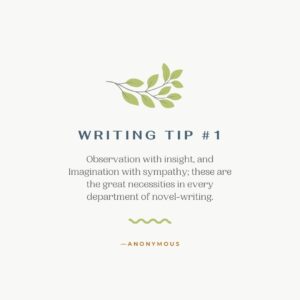



 The Chronical of Narnia Series by C.S. Lewis
 Letters from the Earth by Mark Twain
 Notes of a Native Son by James Baldwin
 Mistakes Were Made (But Not by Me) by Carol Tavris and Elliot Aronson
 From So Simple A Beginning by Charles Darwin (
 Ender’s Game by Orson Scott Card
 The Lord of the Rings Series (which for me includes The Silmarillion) by J. R. R. Tolkien
  Wild Seed by Octavia Butler
 Dune by Frank Herbert
 The Chosen by Chaim Potok